New Study Leverages Machine Learning and Satellite Imagery to Track Algal Blooms in Hamilton Harbour
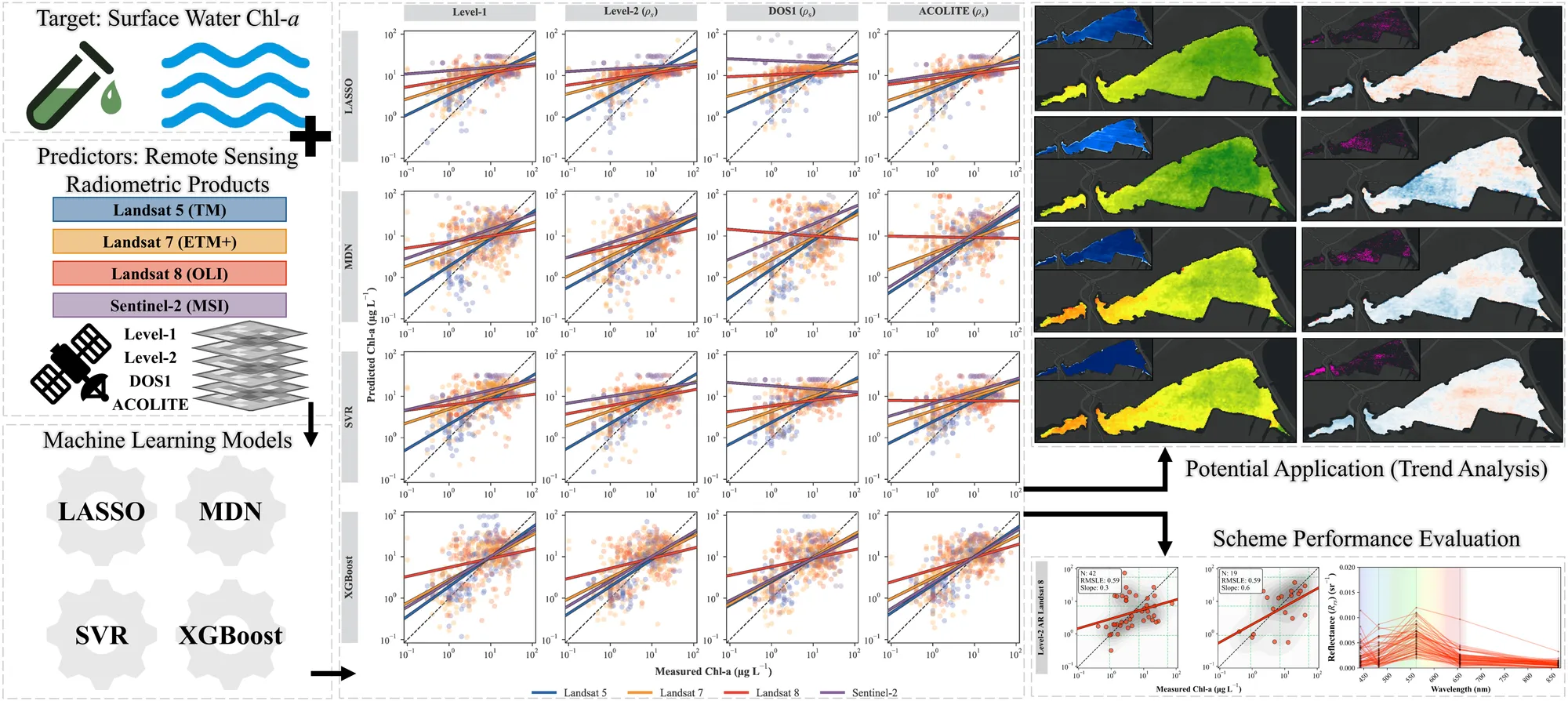
A recent study led by recently graduated ReSEC MSc student, Ali Reza, addresses the challenges of monitoring water quality and tracking algal blooms in complex inland waters. Co-supervised by Dr. Homa Kheyrollah Pour and Dr. Philippe Van Cappellen, the research evaluated over two decades of satellite imagery (2000–2023) alongside more than 600 in-situ water measurements to identify the most accurate method for estimating Chlorophyll-a in Western Lake Ontario. The study reveals that pairing the ACOLITE atmospheric correction tool with an advanced machine learning model (XGBoost) consistently delivers the most reliable water quality data across multiple satellite platforms. By applying this optimized approach, the team mapped 24 years of seasonal Chlorophyll-a trends in Hamilton Harbour, highlighting persistent nearshore bloom hotspots near the Royal Botanical Gardens and Windermere Basin. These findings provide environmental managers with a practical, cost-effective blueprint to monitor lake health, improve early warning systems for drinking-water intakes, and track the long-term success of nutrient-reduction strategies.
Read the full article here